Local landholder to trial multi-species crop to improve livestock performance through winter

In our climate, the cold temperatures experienced over the winter months are the principal factor affecting pasture growth and can result in a winter feed gap. What if you could supplement livestock nutrition by providing additional fodder while improving soil structure and nutrient cycling and build soil carbon at the same time?

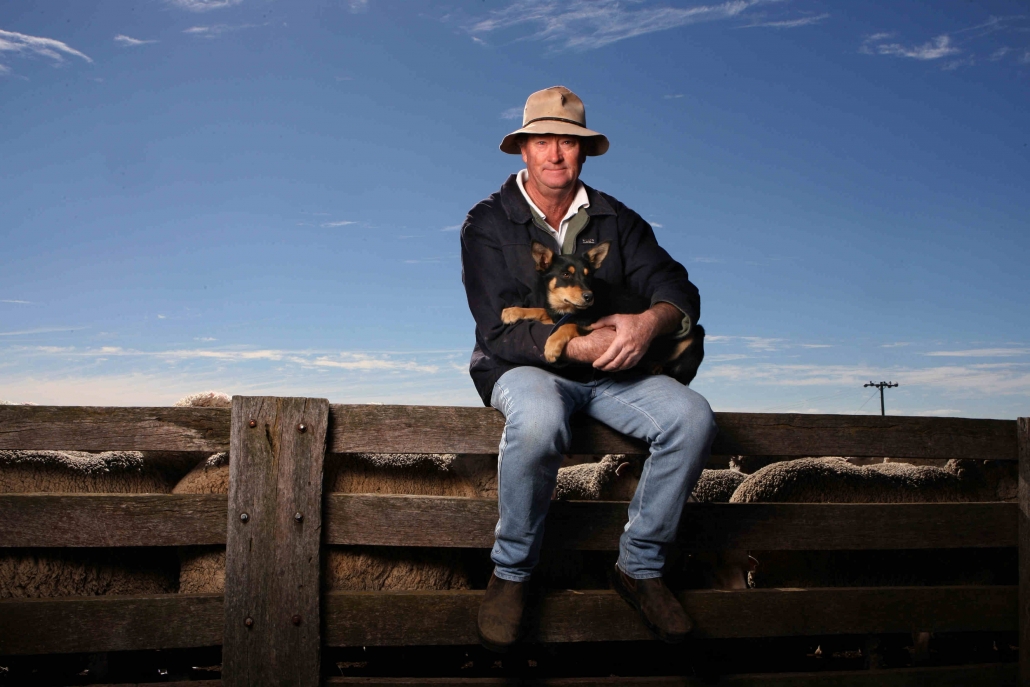
In collaboration with farmer, Colin Seis, Watershed Landcare have launched a project to demonstrate and research the benefits of multispecies forage crops for increased animal performance and soil health. As part of their community focused Australian Good Meat initiative, Meat & Lifestock Australia (MLA) in partnership with Landcare Australia have funded the trial site through the MLA Landcare Excellence in Sustainable Farming Grants.

The project will build on growing evidence from the USA and Australia which has shown that multispecies crops and pasture diversity will increase soil carbon, nutrient cycling, and improve soil biology and farm ecosystems.

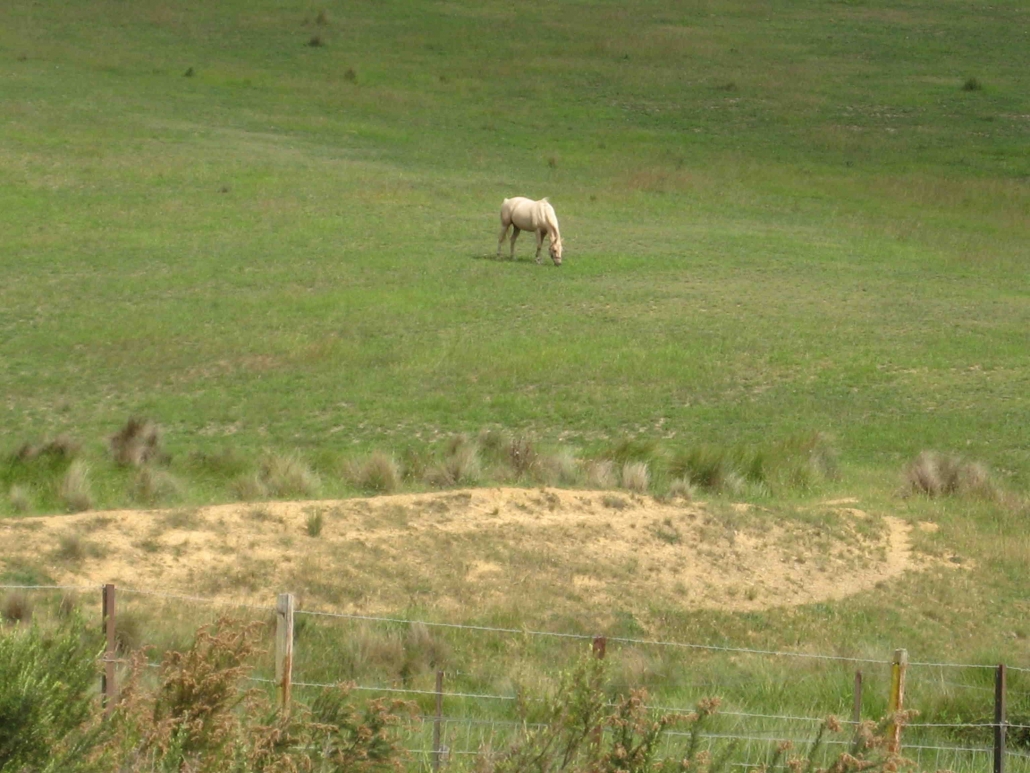
The project will be carried out at ‘Winona’, 20 km north of Gulgong NSW. ‘Winona’ consists of 840 ha of restored native pasture which runs 4000 merino sheep for wool, merino lamb, and mutton production.

Colin Seis will establish a trail site to demonstrate the benefits of multispecies forage crops for increased animal performance and soil health.

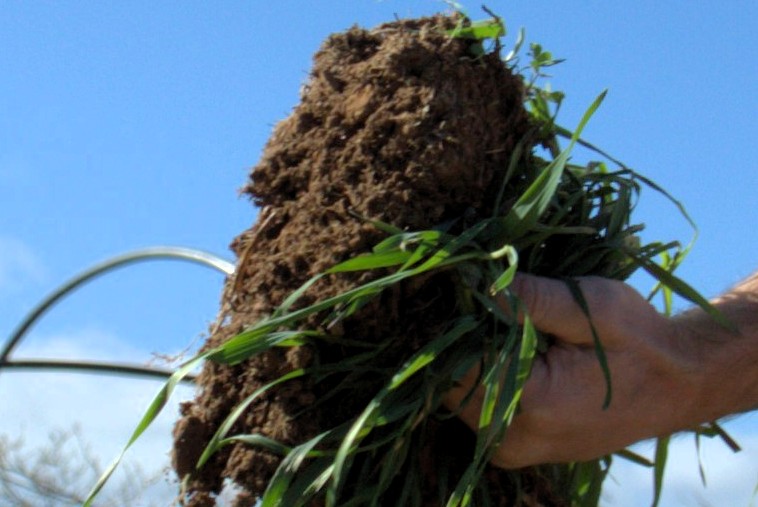
The project will zero till a multispecies mix forage crop into a dormant native grassland. A mix of up to 10 species in a multispecies crop with its diverse mix of plant roots and flowering plants aims to build soil carbon and biology which cycles nutrients. An adjacent area (paddock division) will be sown to a single species fodder crop as a comparison. The project and control paddocks will be used to fatten and finish merino lambs, with weight increases in the sheep periodically monitored over the course of the trial. Changes in soil carbon, soil structure and chemistry and grassland species will be monitored pre-sowing and post-grazing.

Multispecies pasture cropping has multiple benefits for livestock producers. It provides a viable farm adaptation to reduced and changing rainfall events; by sowing an opportunity crop to provide high quality livestock feed while reducing financial risk.

Besides increasing livestock performance, and so farm profitability and sustainability, multispecies pasture crops have long-term benefits for soil nutrient cycling, biology, pasture productivity and increase soil carbon sequestration which can offset livestock emissions.

Additionally, pasture management over the entire property can be improved during the winter feed gap. By establishing a multi-species autumn crop and providing additional fodder through winter, pasture rest times can be maintained and overgrazing prevented on adjacent paddocks; improving future growth rates of pastures, reducing bare ground, and reducing weed invasion whilst maintaining stock health.

The project will gather data of lamb performance (weight gain), crop biomass, pasture species composition, and soil chemistry and structure, providing objective data evidence of this practice.

The trial will continue until 2024 by sowing a diverse multi-species forage crop on the same area and monitoring the changes in soil carbon and nutrient cycling over a longer time frame.

Landholder incentives to enhance Box Gum Grassy Woodlands

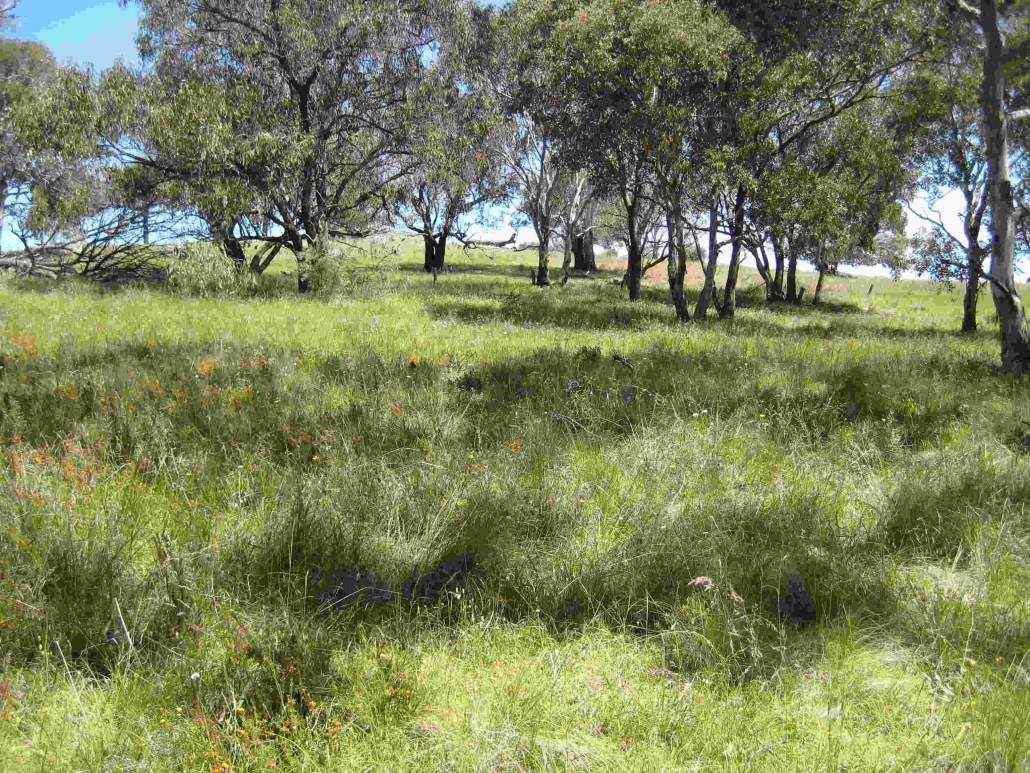
Box Gum Grassy Woodlands were once widespread along the western slopes and tablelands of the Great Dividing Range. Today less than 4% of this ecological community remains.

This endangered ecological community is closely associated with fertile clay loam soils of moderate depth on flat to undulating terrain. Within the Watershed Landcare region they occur mainly in areas with a 550 mm to 800 mm annual rainfall and an elevation below about 700 m above sea level.

Box Gum Grassy Woodlands are dominated by the eucalypts White Box, Yellow Box and/or Blakely’s Red Gum and are characterised by their understory; a sparse shrub layer and a diverse mix of native grasses and herbs.

Trees provide many valuable ecosystem services to productive systems, such as improved soil structure and fertility, shade and shelter for livestock and reduced soil moisture loss. They also serve as wildlife corridors, providing stepping stones for animals between foraging and nesting sites and water sources. This will become increasingly important as the habitat ranges of our native fauna shift as the climate continues to change.

Watershed Landcare have incentive funding available for landholders to conduct on-ground works to increase the extent or quality of Box Gum Grassy Woodland on the land they manage. As part of the Patches and Paths project, $7000 in funding is available each year until 2022.

Project funding can be utilised to contribute to materials and/or labour. Eligible activities include:

  • fencing around mature, isolated paddock trees and remnant native vegetation clusters
  • fencing to enable changed grazing management intended to allow natural regeneration of woodland vegetation species
  • in-fill planting, especially to increase diversity of understory species
  • revegetation activities to improve landscape connectivity
  • any other activities that protect or enhance White Box, Yellow Box, Blakely’s Red Gum Grassy Box Woodland and Derived Grassland, especially novel and innovative approaches

Applications for staged projects will be supported. For example you can apply for a 3 year project to conduct fencing in year 1, site preparation in year 2 and in-fill planting in year 3.

Expressions of Interest (EOI) for the Patches and Paths project are now open to landholders in the Watershed Landcare region. More information about the project is available on our website: http://watershedlandcare.com.au/projects/patches-paths/

Not sure if you have White Box, Yellow Box and/or Blakely’s Red Gum on your place? Give us a call, Watershed Landcare’s resident botanist is happy to help.

If you don’t have Box Gum Grassy Woodland tree species on your place but there are remnants on the roadside corridor or a neighbouring property you may still be eligible to conduct revegetation activities to improve landscape connectivity.

If you would like to discuss your individual situation or project idea contact our coordinator, Agness Knapik: info@watershedlandcare.com.au or 0435 055 493.

Help contribute to bushfire recovery science

The 2019-20 summer saw unprecedented bushfire activity in eastern Australia, making headline news around the globe. With the bushfire season not over, and fires still active in many areas, the full extent of the damage and cost to people, property, livestock and the natural environment may not be known for many months.

The sheer extent of the fires and the impacts on our community have left many of us feeling helpless. A recently launched citizen science project is providing an opportunity for people to make a positive contribution to post-bushfire efforts.

A group of researchers from the Centre of Ecosystem Science at the University of NSW are trying to understand how the environment recovers from this unprecedented fire season through the Environment Recovery Project: Australian Bushfires initiative. And they need your help to collect species recovery data to advance this important scientific goal.


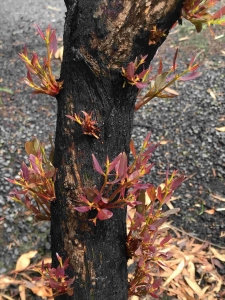
Image credit: Casey Kirchhoff

“We will use people’s observations for future research into understanding how some areas recover better than others, and in different places, as well as understanding which animals and plants come back first,” Professor Richard Kingsford, Director of the UNSW Centre for Ecosystem Science, said.

“The key aims of this initiative are to understand which plant species are resprouting and growing seedlings, to calculate when and how animals return to burnt areas, and to highlight which species are struggling to recover and might need our help.

“Understanding recovery from this unprecedented fire season is scientifically critical and the opportunity to harness the community’s resources through the Environment Recovery Project is a practical way of doing this.”

Many temperature records were broken this summer and Australia’s climate is going to continue to get hotter and drier, contributing to more frequent and more intense bushfires.

Observations from the Environment Recovery Project will build a picture of when, where and how Australia’s ecosystems recover from these fires, which will inform future research. Participation from the public means that many observations, from an extensive area can be collected, something that would be impossible with the resources available to scientists alone.

Providing it’s safe to do so, take a walk in areas of burnt bushland. But please be aware of current weather conditions and fire danger ratings. Never enter areas where there is active fire. Many bushfire impacted communities are still grieving, please be respectful of their privacy. Do not trespass private property. Always stay on designated walking trails and do not trample recovering biodiversity.

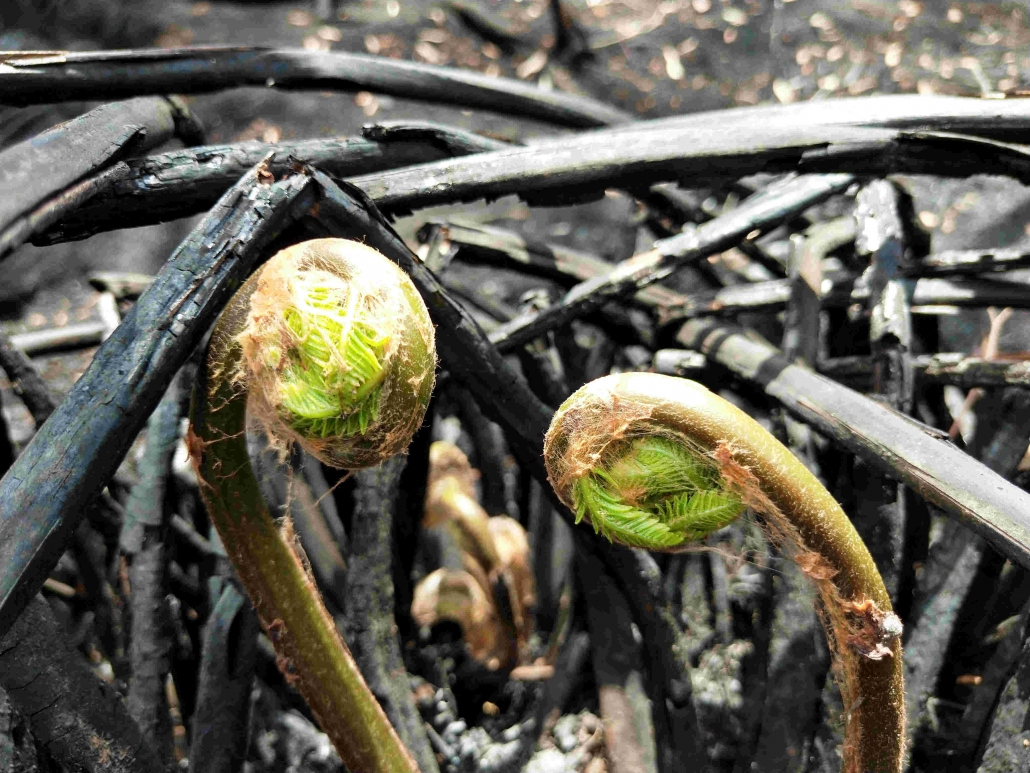
Image credit: Casey Kirchhoff

To contribute simply download the mobile app (available from: https://www.inaturalist.org/projects/environment-recovery-project-australian-bushfires-2019-2020) and take some photos with your phone:

  • Plants (native and weeds): Seedling or resprout
  • Animals (natives and ferals): Alive or dead, tracks and scats
  • Fungi and Lichen
  • Landscapes: Photos that capture scorch height (how high the fires went) or the extent of leaves lost up to the canopy

Observations of common species are just as important as rare species.

Beware herbicide application in very dry conditions

The ongoing dry conditions experienced over much of the state are cause for concern amongst land managers and gardeners for several reasons. The primary, and most obvious, concern is for the provision of adequate water and forage for the health and productivity of livestock.

Another cause for concern may be the disruption in the annual spray programmes to reduce weed species.

When plants are moisture stressed translocation and respiration slow dramatically, restricting the movement of herbicides to their sites of action. Plants experiencing high temperature, low humidity and low soil moisture conditions tend to have a thicker cuticle (the protective cover of the leaf) with more waxy deposits on the surface. This reduces the absorption of foliar herbicides.

The timing and amount of rainfall not only determines the moisture status of the plant but also removes dust from the leaves and modifies the leaf cuticle. Recent rainfall will therefore improve herbicide uptake.

Soil moisture influences soil microbial activity which assists in the breakdown of herbicides in the soil. Dry soil conditions prevent the biological and chemical processes that degrade herbicides, making them more likely to persist and injure subsequent germinations of perennial pasture plants.

When weeds are growing under extreme moisture stress it may be best to wait to apply herbicide until conditions improve.

Maintaining adequate groundcover is very important at all times of the year. Good groundcover protects the soil from extreme climatic conditions, supports biological activity within the soil, and reduces weed seed germination and growth through competition.

Will your groundcover absorb a ‘gully raker’ when the drought breaks?

When prolonged dry conditions break it is often with heavy a downpour, especially if this occurs within the summer months. These ‘gully rakers’ can cause much damage to farm infrastructure if there is no groundcover to absorb the moisture or to slow the flow of water across the landscape. There would be many in the district who can remember when drought breaking rains have reduced farm dams to a stinking crust of animal manure and other organic matter.

Alternative methods of weed control might be looked for in prolonged dry periods. Annual plants can be slashed or mown before their flowers mature and perennials can be chipped, pulled up if numbers are small, or slashed several times. These methods are labour intensive and therefore more costly, however perennial pastures will be protected and persistent herbicide residue in the soil will not be an issue. An added benefit will be the mulch of slashed, chipped or mown weeds covering the soil, protecting it from extreme climatic conditions and providing soil organisms with a food source.

Running an intensive soil extension program in 2020

Central Tablelands Local Land Services will be running an intensive soil extension program in 2020. The Diggine Deeper program aims to increase farmers’ understanding of soils and the processes driving productivity and to provide them with knowledge and tools to make decisions and implement change to address soil issues and improve soil condition.

This project is supported by Central Tablelands Local Land Services, through funding from the Australian Government’s National Landcare Program and will cover: soils and how they function; soil nutrients on-farm; how different farm practices affect soil health and fertility; soil tests – how to read them with confidence and assess your soil health in the paddock; monitoring, identifying and mapping soil types across your property; identifying soil constraints such as low organic matter, pH, soil salinity and compaction; setting benchmarks for your soils and taking effective action to address issues; and biofertilisers, fertilisers, soil amendments and the range of fertility input options.

Participating businesses will also have the opportunity to have a comprehensive soil test performed and the results interpreted, obtain professional advice, education and mentoring and get to know other local farming businesses who are interested in improving soil health.

The program will be facilitated by Agricultural Ecologist, David Hardwick, assisted by Central Tablelands LLS staff and specialists.

The Digging Deeper intensive soil extension program is open to farmers within the Central Tablelands region who are running an enterprise, from any industry, on 10 hectares or more.

Numbers for the project are strictly limited to 12 farming businesses. To be eligible to participate each interested business is required to submit an Expression of Interest (EOI) and attend six soil health sessions in 2020 at a cost of $90. Tentative dates are: 10 February, 9 March, 6 April, 11 May, and 15 June with the final dates chosen by the group in February. Each session will involve a theoretical segment and a practical segment out in the paddock.

EOIs for the program are open and will close at midnight on Friday, 13 December 2019. To submit an EOI visit: www.surveymonkey.com/r/CTLLSDiggingDeeper. EOIs will be assessed on set criteria. If a high number of applications are received, applicants may be asked further questions to assist with evaluation. Successful applicants will be notified in early January 2020.

For more information contact Liz Davis, Central Tablelands Local Land Services Regional Agriculture Landcare Facilitator on 0427 452 662 or by email: liz.davis@lls.nsw.gov.au.

Tiny ecosystem engineers

A single cow produces around 18 kg of manure each day. For a herd of 100 cows, that’s over 650 tonnes each year. That’s a lot of fertiliser!

Dung left on the soil surface releases nutrients and carbon to the atmosphere, through oxidation, or they are washed away and end up in waterways. Not only are beneficial nutrients lost but they become pollutants in the air and water. The amount of pasture available to grazing livestock is also reduced, as cattle will not eat grass growing near a cow pat.

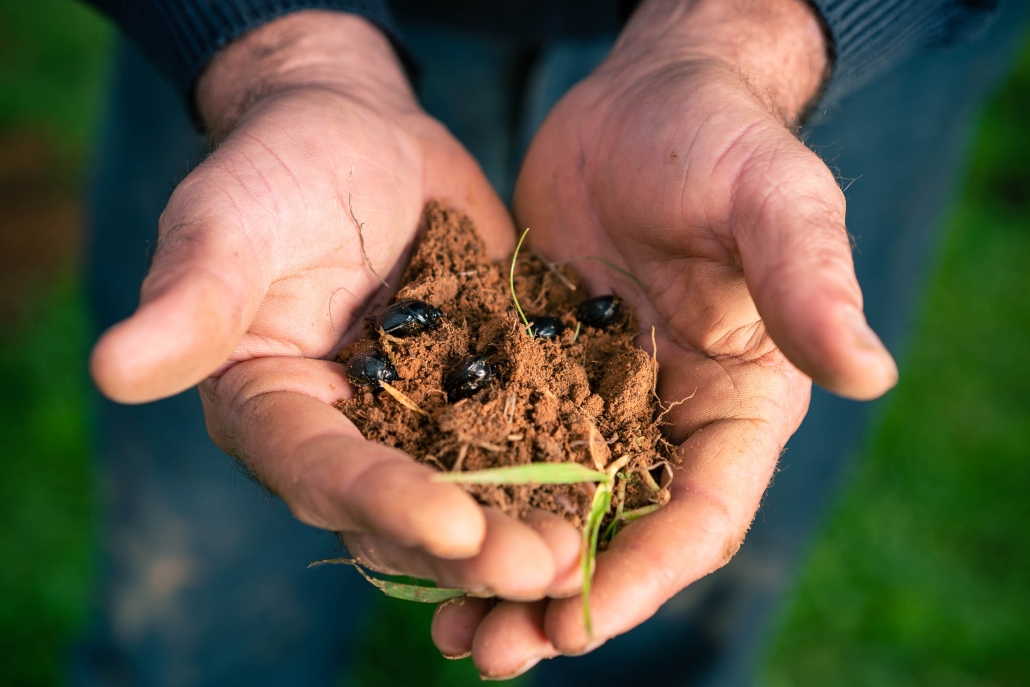
Dung beetles can make a significant contribution to reducing these problems. By shredding and burying dung, they incorporate nutrients and carbon into the soil and stop losses to waterways and the atmosphere. Dung burial also means that more pasture is available for grazing and life cycles of internal parasites and flies are broken.

Dung beetle activity also has other benefits. The tunnels created by dung beetles improve the aeration, water permeability and water holding capacity of soils. Their activity also increases other biological activity (micro-organisms and earthworms), improves soil fertility and structure through mixing of clay sub-soils which results in stronger root growth and higher yields.

These benefits were recognised over half a century ago when the CSIRO launched its dung beetle project in 1968. The project aimed to introduce a range of dung beetle species into Australia, so that cattle dung would be shredded or buried within 48 hours in all of Australia’s climatic zones. Each dung beetle species is active for only a part of the year, so a range of species is required for activity over the full season.

Due to funding cuts the project was discontinued in 1984 with only around 50 of the proposed 150 species introduced by that stage. Of these, around 23 have established but do not cover the full extent of their predicted distribution ranges.

The Dung Beetle Ecosystem Engineers (DBEE) project is aiming to fill this gap. The five-year project, supported by MLA through funding from the Australian Government’s Rural Research & Development for Profit program, will fill seasonal and geographic gaps in the distribution of beetles across southern Australia as well as quantifying the benefits dung beetles provide for primary producers.

The DBEE project will conduct a nation-wide survey of dung beetles, import and breed three novel Mediterranean species and two endemic species and determining the economic value of dung beetles for sheep and beef producers as well as the understanding of the impact dung beetles have on the ecosystem.

For more information about the project visit their website: https://www.dungbeetles.com.au

Watershed Landcare would like to gauge interest for being involved in the project in our region. If you are interested in finding out more about dung beetles or doing a dung beetle survey on your property let us know: info@watershedlandcare.com.au.

Watershed Landcare AGM

Watershed Landcare will be holding its Annual General Meeting on Friday, 22 November.

We would like to invite all Watershed Landcare members and any interested members of the community to attend. The meeting will provide an overview of Watershed’s activities over the past year as well as an opportunity to mingle and chat at the dinner afterwards.

Are you interested in the role regenerative agriculture has to play in ensuring increased production of healthy food, as well as long term sustainability and resilience of our farm land and ecosystems?

Our guest speaker will be Dr Peter Ampt, consultant in ecological and regenerative agriculture, natural resource management, extension and rural development. Dr Ampt will talk about the role of ruminants in reducing agriculture’s carbon foot print, including recent research indicating that appropriate crop and grazing management can facilitate soil carbon sequestration and improve ecosystem services such as soil nutrient cycling, soil stability, water infiltration, biodiversity and wildlife habitat.

We are also seeking interested members to be involved in the Management Committee for the next 12 months. The committee meets the first Wednesday of the month at 5:30pm.

Watershed Landcare continues to have strong support from our members, sponsors and partners and Landcare membership remains strong and enthusiastic. We’re actively seeking funding from various sources to continue to deliver training, workshops, seminars, field days, on-ground works and projects to protect and enhance the environment and sustainability of our region.

Want to find out more about Watershed Landcare, our projects and how you can get involved in this enthusiastic, grass roots community group? Come along for a fun evening and meet other Watershed Landcare members.

The AGM will be held on Friday, 22 November at the Straw Bale Shed at the Australian Rural Education Centre (AREC), 6pm for a 6:30pm start. Dinner will be provided at the conclusion of the meeting.

All are welcome to attend the Watershed Landcare AGM. This event is free, but please RSVP by Wednesday, 20 November for catering purposes to Claudia Wythes, Watershed Landcare Coordinator, on 0412 011 064 or claudia.wythes@watershedlandcare.com.au.

Art revitalising a rural Kandos community

Performance, sound, cabaret, interactive and electronic arts, video, photography, and installation will feature in a festival that celebrates the unlikely friendship between a small country town and a contemporary arts community.

When the Kandos Cement works, a major employer and backbone of the town, closed in 2012 the future of the town was uncertain. A group of artists rose to the challenge of resurrecting a rural community after the closure of a major industry, and Cementa was born. The arts organisation was founded to cultivate an art culture and raise the profile of the town to improve the visitor economy, attract new residents and contribute to rural regeneration.

Since the end of 2017 artists have been visiting Kandos on residency, getting to know the town, connecting with the people and the landscape and making work in response. A biennial festival of contemporary art has also been a feature of the group’s work.

The festival will again be held this year over 4 days and nights, from 10am Thursday, 21 November to 4pm Sunday, 24 November in venues and locations across Kandos and surrounds. Taking its regional situation as its focus, Cementa celebrates the rich diversity of voices that can be heard within the contemporary arts community.

The heart of Cementa19 is the Artists program with more than 40 artists making, exhibiting and performing work that address the identity, history and current social, environmental and economic context of the town and its region. This year there will be meteors, fireworks, melting sculptures, burning mountains, historical mobiles, industrial ice cream, musical vehicles, a thundering fort, and lots more.

In addition to the 40 artworks exhibited across the town, the festival program will feature both free and ticketed events including performances, exhibitions, workshops, music and several initiatives and larger projects engaging directly with regional communities, artists and culture.

The festival will culminate with a dinner prepared from locally foraged ingredients where the Kandos School of Cultural Adaptation will unfold their two-year journey of discovery: An Artist, a Farmer, and a Scientist Walk into a Bar. This project saw nine artists engaging with farmers, scientists, Aboriginal custodians, and other regional stakeholders who are changing the culture of agriculture, and adapting farming practices and land management in response to drought, climate change, and land degradation.

For more information and the full program visit the website: https://cementa.com.au/

Resilient farmers project

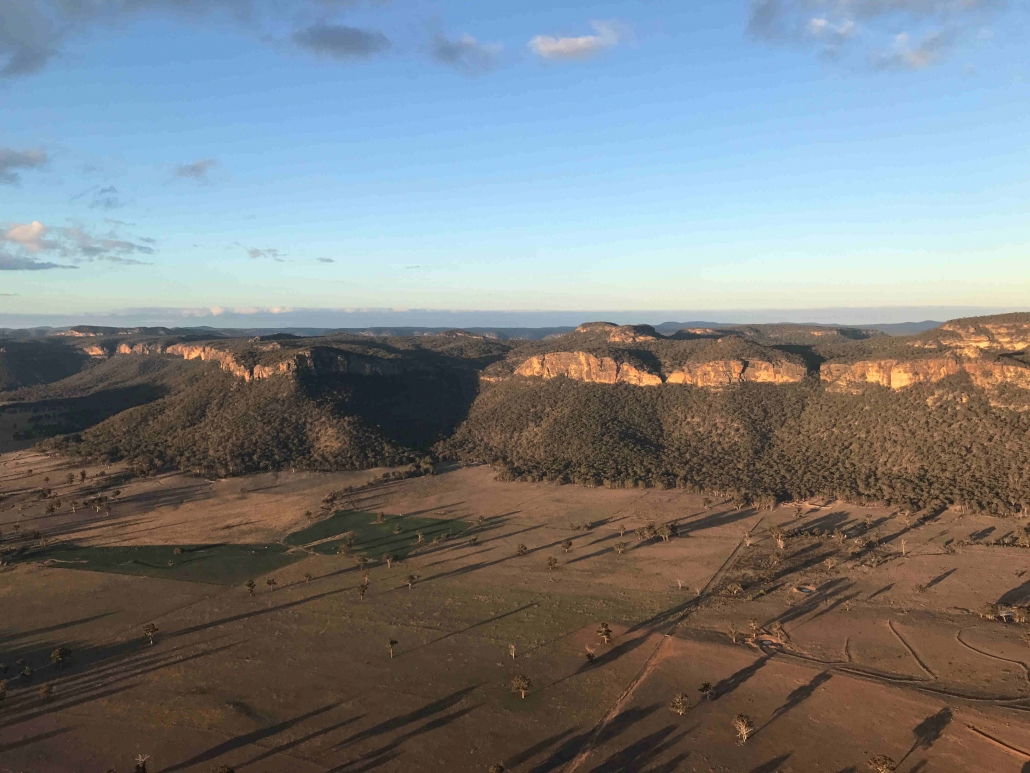
A number of landholders in the Capertee Valley are working together to improve drought mitigation and the hydrology of the valley, while at the same time promoting mental health and well-being through increased social activity and community connectivity.

Growing interest in restoring the natural cycling of water and improving resilience have led a number of landholders in the Valley to explore the technique of Natural Sequence Farming. Several have attended training courses at the Mulloon Institute and the community are now collaborating on sharing their knowledge and skills.

As part of the ‘Resilient Farmers’ project Capertee Valley Landcare will be hosting a screening of the ‘2040’ documentary film and a talk about Natural Sequence Farming from 5:30pm to 10pm on Saturday, 2 November at ‘Warramba’, Glen Alice. This event is also supported by Lithgow City Council, Rural Adversity Mental Health Program (RAMHP) and CEMENTA.

Natural Sequence Farming is an agricultural practice developed by Peter Andrews which aims to re-establish the natural function, fertility and resilience of agricultural landscapes. One of its primary aims, and main benefits, is a landscape that harvests more water, holds more water, and uses available water more effectively, resulting in increased primary production.
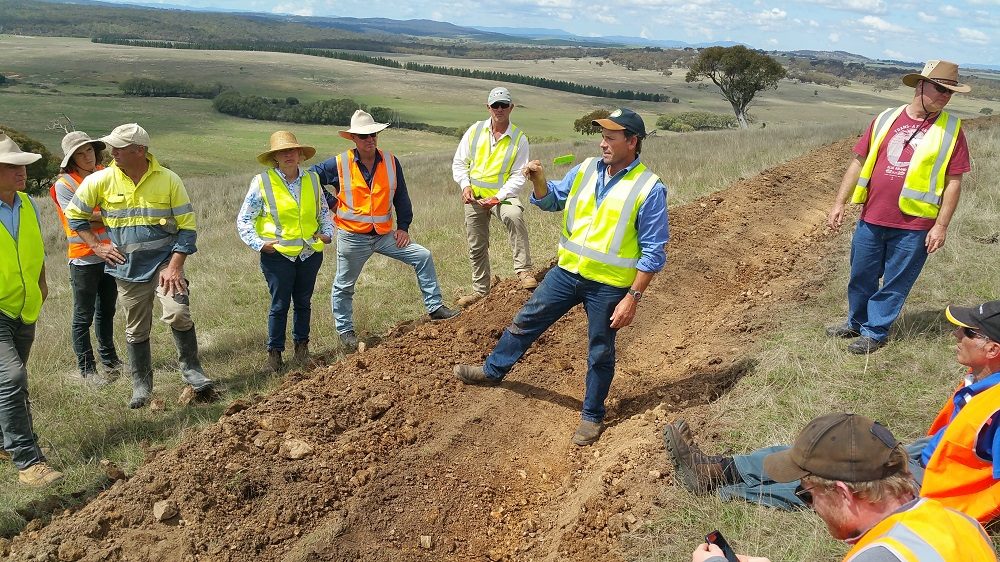
Capertee Valley Landcare have invited Peter Hazel from the Mulloon Institute to present a talk about rehydrating the landscape using Natural Sequence Farming methods. Peter will share their success story and discuss the possibilities of replicating this project in the Capertee Valley.

Image credit: Terrie Wallace

The event will also feature cello music by Georg Mertens and friend while the sun sets, surrounded by the spectacular sandstone cliffs in the valley, followed by an outdoor screening of the ‘2040’ documentary film. There’ll be popcorn and choc tops and simple food to buy (like hamburgers). Bring your own drinks and seats or blankets.

This event is free but numbers are strictly limited. For further information or to register please contact Julie Gibson, Capertee Valley Landcare, by email: cvlandcare@gmail.com or on 6379 7317.

Learn about our amphibians

There are around 200 frog species in Australia, many of these endemic. As amphibians frogs rely on the presence of water, they need to keep their skin moist and need water to complete their lifecycle. Not always an easy task on the driest continent on the planet.

Stoney Creek Frog (Litoria wilcoxii, male)

Some species inhabit the wettest parts of our continent, such as tropical rainforests and alpine swamps. Others have developed unique adaptations to take advantage of Australia’s intermittent rainfall patterns. Some species have even colonised the arid interior and survive prolonged dry spells by burrowing for long periods of time and only emerge after heavy rainfall.

Frogs are regarded as very good indicators of water quality and environmental health; their skin is permeable and they are very sensitive to changes in air and water quality. Frog populations in Australia, and around the world, are in decline. This is mainly thought to be a result of climate change, air and water pollution but land clearing, habitat fragmentation, changes in hydrology and disease may also be contributing factors. This is bad news as frogs play an important role in ecosystems, as both as predators and as prey they are an integral part of may food webs.

Want to learn more about these fascinating creatures?

The Mudgee Microscope Group would like to invite all interested to join them for an evening exploring frogs with our guest speaker David Coote, Senior Threatened Species Officer with the Biodiversity and Conservation Division.

We will learn about the range of frog species from the Mudgee Area as well as some interesting facts about frogs in general. David’s talk will also cover the status of frogs worldwide, in Australia and in NSW. We will also look at a case study of the Booroolong Frog and find out what we all can do for frogs.

Frog Night will be held in the Straw Bale Shed, Australian Rural Education Centre on Thursday, 31 October from 6:30-8:30pm. The cost for the evening is $10 and includes dinner (BYO drinks). All welcome but children must be accompanied by an adult.

To register please visit our website: http://watershedlandcare.com.au/wslc-events/frog-night.

For further information or to RSVP please contact Agness Knapik, Watershed Landcare Coordinator, on 0435 055 493 or by email: info@watershedlandcare.com.au.